%20(5).webp)
%20(3).webp)

The Night Emily Stood Staring At Her Bathroom Mirror
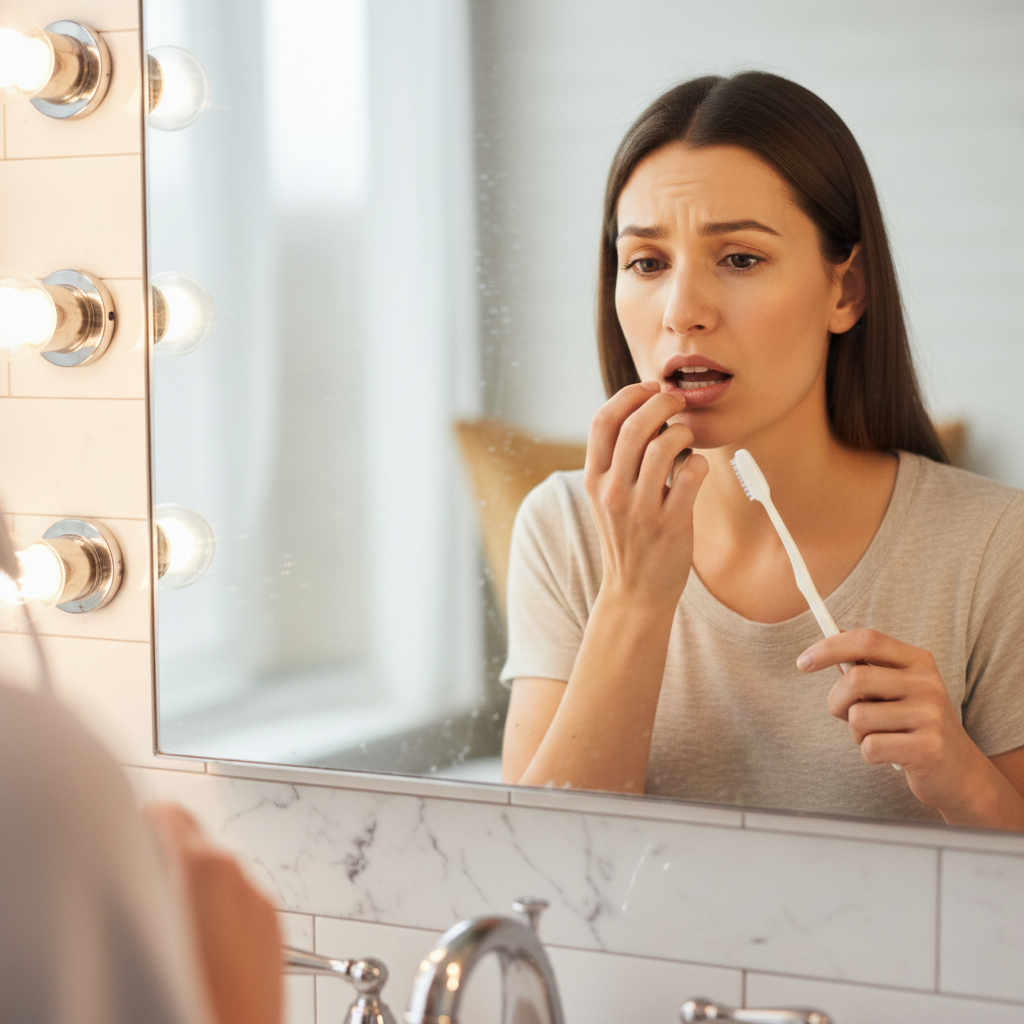
Emily noticed it on a random Tuesday night. Not the dramatic, movie-style moment, just her reflection under unforgiving bathroom lights while brushing before bed. Her teeth looked… dull. Not unhealthy. Just tired. Like they’d been through too many cups of coffee and not enough sleep.
She leaned closer to the mirror, pulling her lip back slightly. “Did they always look this yellow?” she wondered. Emily was 34, worked in marketing, smiled for a living, and suddenly felt self-conscious about something she’d never questioned before. Her phone buzzed on the counter. A group chat photo from earlier that night. There it was again. Her smile, not bad, just not bright.
Five minutes later, she was scrolling online. “Do teeth whitening strips work?” The question felt almost vulnerable to type.
The Quiet Dilemma Behind A Simple Google Search
Emily wasn’t chasing movie-star white teeth. She just wanted her smile back. The one she remembered from a few years ago. But the internet made it confusing fast. Whitening strips promised dramatic results in days. Some reviews swore by them. Others warned about sensitivity, uneven color, or wasted money.
Her internal dialogue bounced around. Are whitening strips safe? Do dentists hate them? What if I ruin my enamel? Why does everyone else seem to know what to do except me?
This is the part many people don’t talk about. Teeth whitening isn’t really about teeth. It’s about confidence, first impressions, and feeling comfortable when you laugh without thinking.
So, Do Teeth Whitening Strips Actually Work?
Here’s the honest answer Emily eventually learned. Yes, teeth whitening strips do work, but not in the way ads want you to believe.
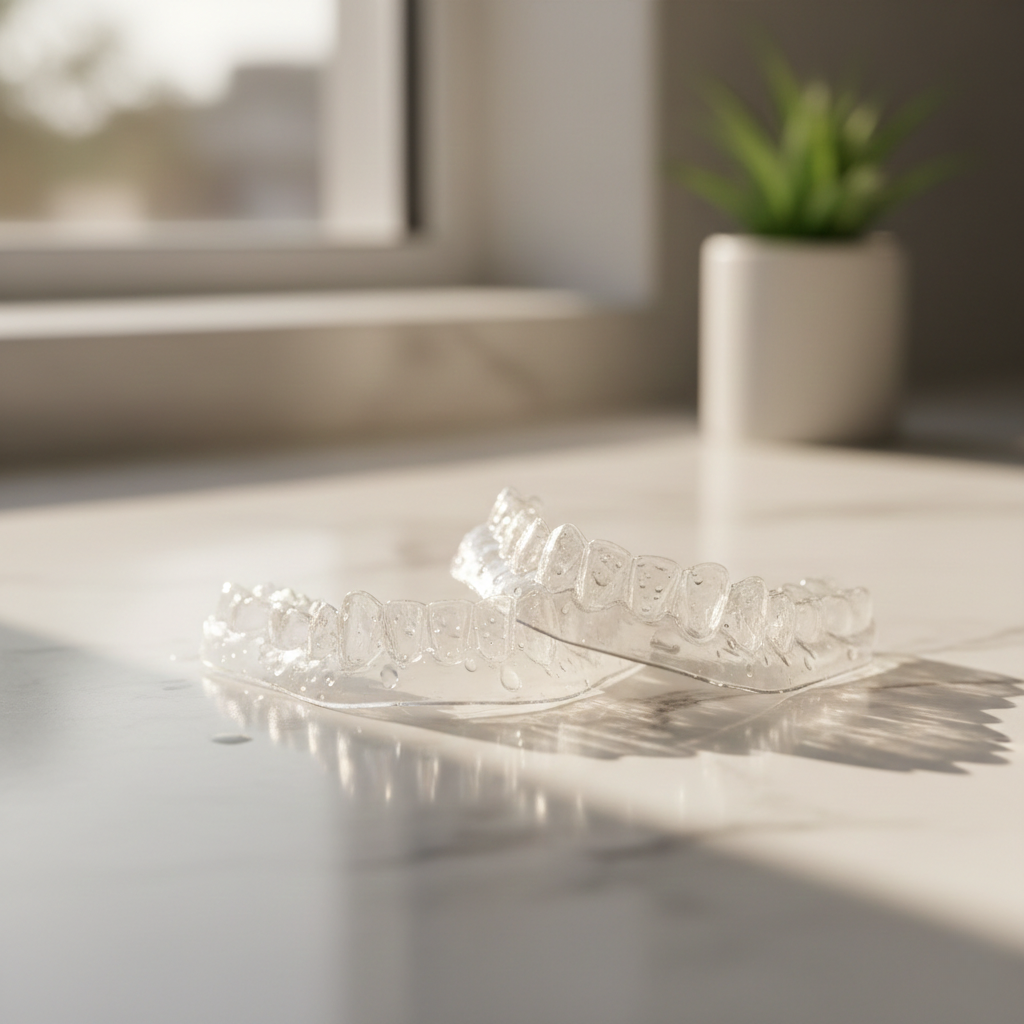
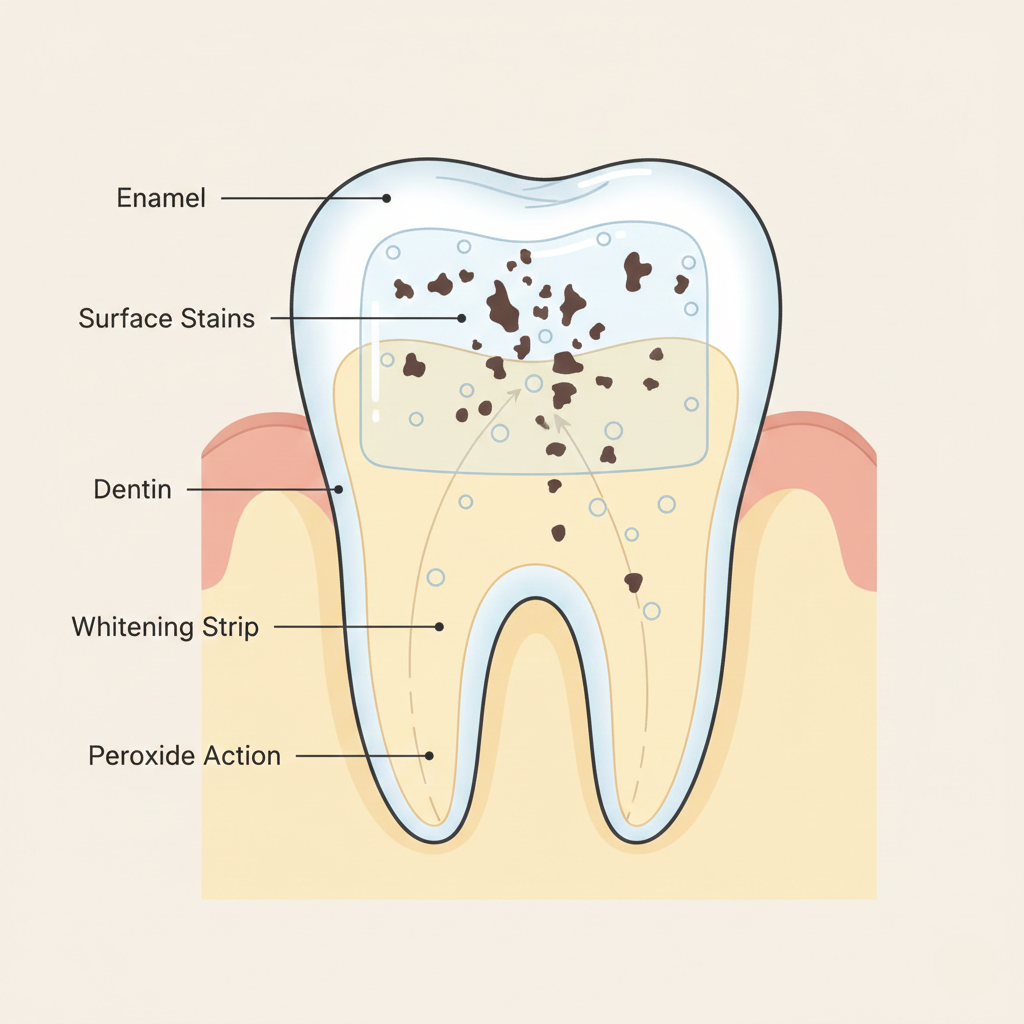
Whitening strips use peroxide based ingredients, usually hydrogen peroxide or carbamide peroxide. These ingredients seep into the enamel and break apart stain molecules. Think of stains like tiny dark puzzle pieces lodged in microscopic grooves. Whitening breaks them into smaller pieces, making them less visible.
But here’s the key detail that surprised Emily. Strips only work on certain types of stains.
Surface stains from coffee, tea, red wine, soda, or smoking respond well. Deeper discoloration from medications, trauma, or aging enamel often does not.
What Whitening Strips Feel Like In Real Life
Emily bought a well-known brand from the pharmacy. The first night, she peeled the strip carefully and pressed it onto her teeth, smoothing it like a sticker.
There was a faint chemical taste. Not terrible, but noticeable. She sat on the couch, lips awkwardly closed, scrolling her phone for 30 minutes.
By night three, she noticed it. A zing of sensitivity, especially when sipping cold water. It wasn’t unbearable, but it was real.
This is where expectations matter. Whitening strips often cause temporary sensitivity because peroxide opens microscopic pathways in the enamel. It’s similar to opening windows in a house during winter, everything feels colder until they close again.
Most people tolerate it. Some need to stop early.
Why Whitening Strips Work For Some People And Not Others
Emily’s friend Sarah tried the same strips and saw dramatic results. Emily’s change was subtle.
Why?
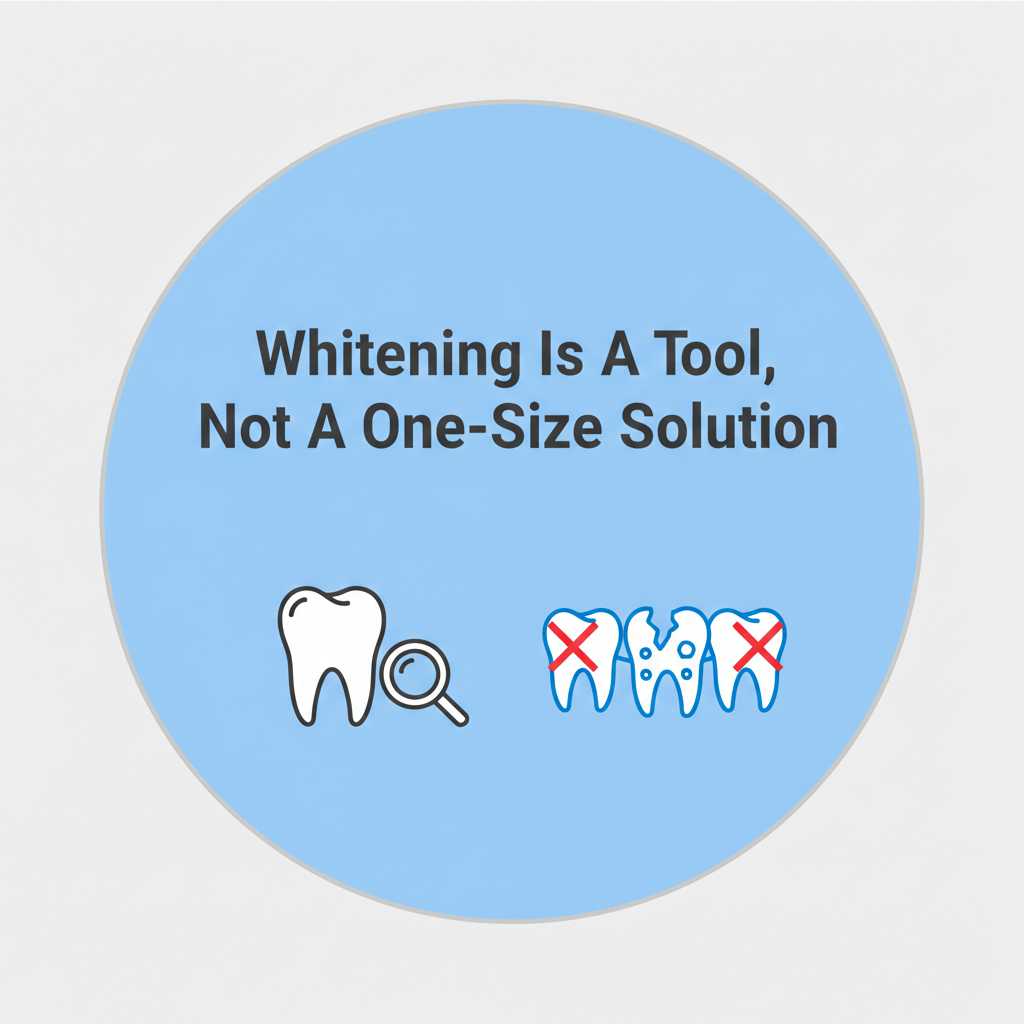
Tooth color is personal. Your enamel thickness, natural dentin shade, age, and stain history all matter. Whitening strips can’t change the underlying color of dentin. They only lighten what’s reachable.
If your teeth are naturally darker or have internal discoloration, strips hit a ceiling fast.
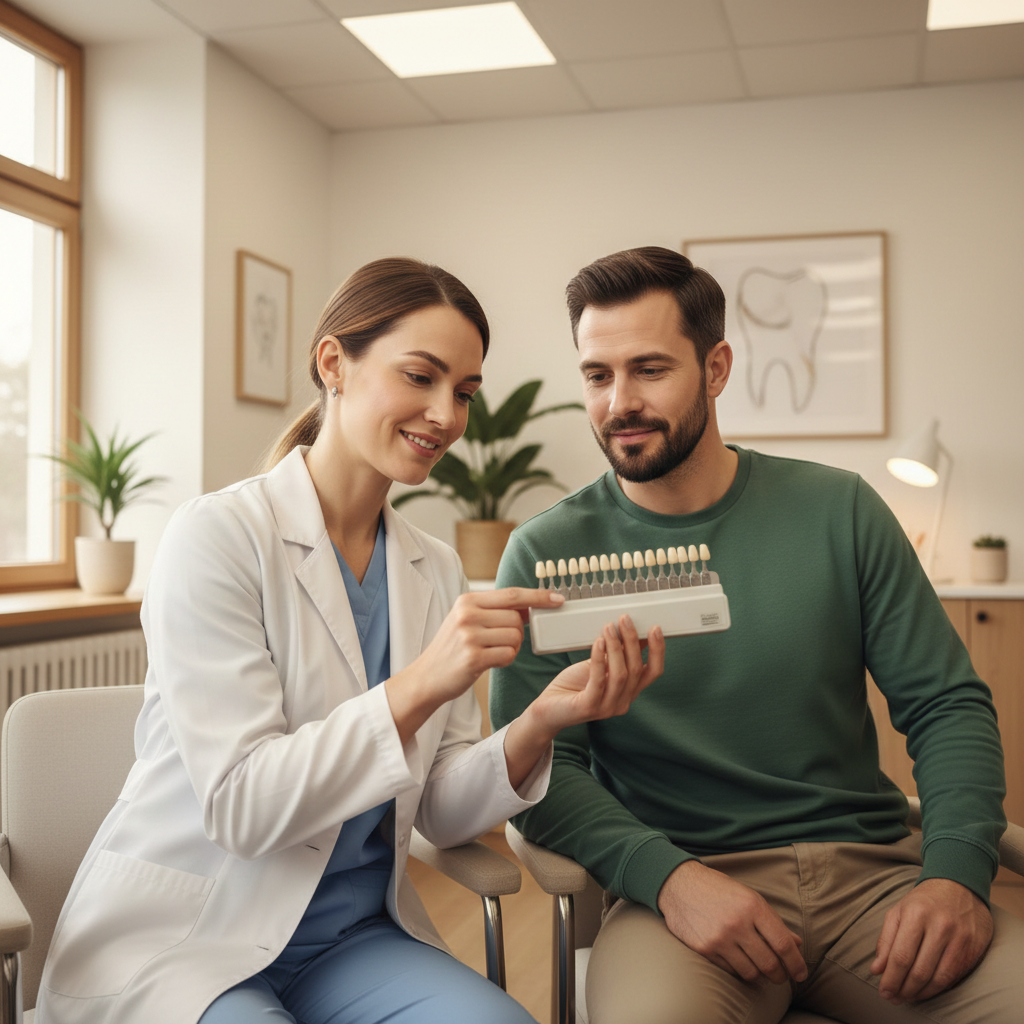
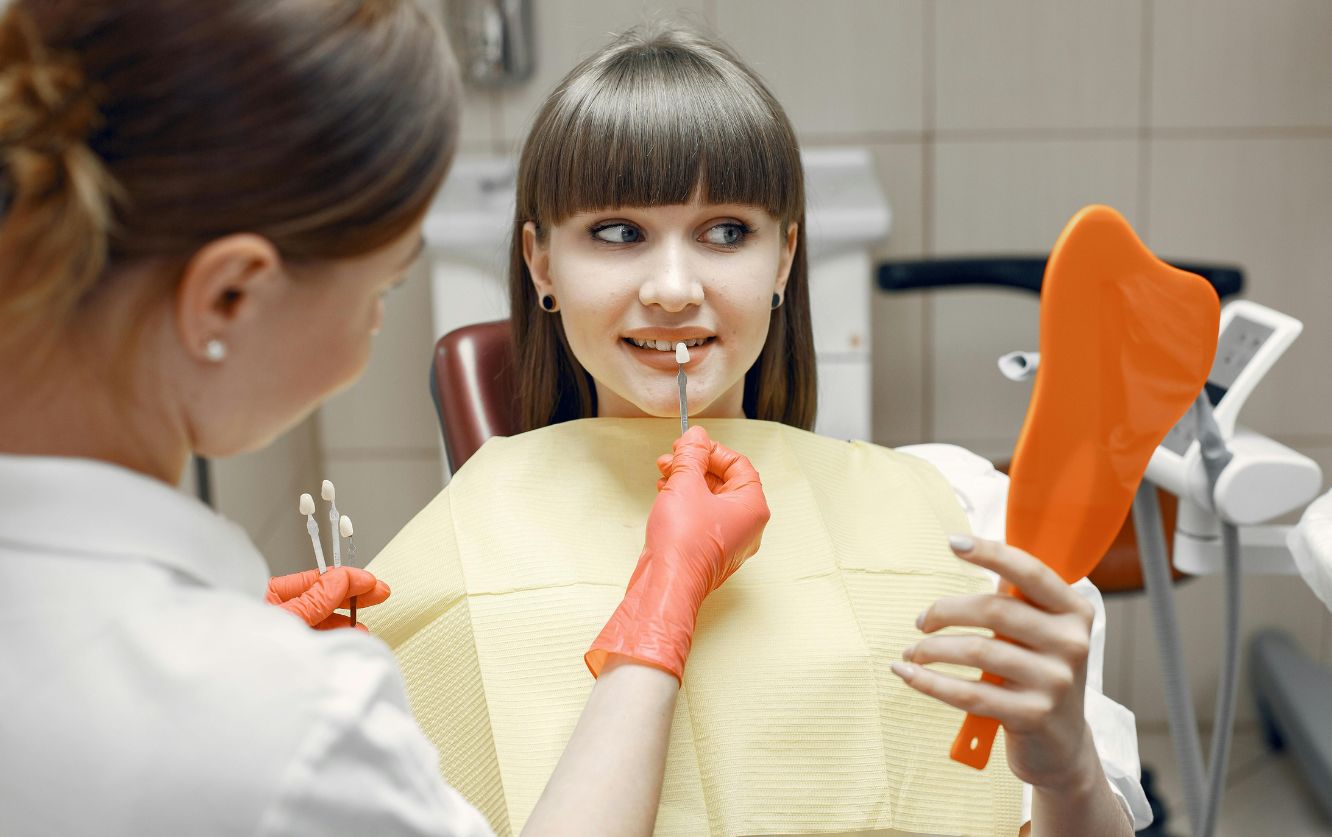
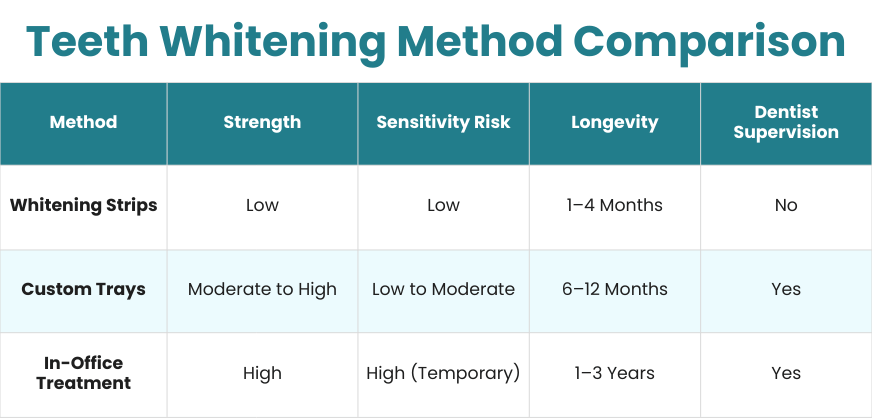
This is why dentists often recommend starting with an exam. At Rosedale Dental, we see patients disappointed not because whitening failed, but because no one explained what was realistic. A quick evaluation during an exam and X-rays can tell you whether strips will help or frustrate you.